
相约星期六
Former President Donald Trump Pleads Not Guilty in Georgia Racketeering Case_我的网站

一 |
Former President Donald Trump pleaded not guilty to criminal charges related to his involvement in a sweeping scheme to overturn the 2020 presidential election results in Georgia and waived his right to appear at an arraignment scheduled for next week.
“Understanding my rights, I do hereby freely and voluntarily waive my right to be present at my
arraignment on the Indictment and my right to have it read to me in open court,” the former president said in the court filing presented on Thursday.
The arraignment is set for the morning of Sept. 6 at Fulton County Superior Court in Atlanta.
Earlier this month, Trump and 18 of his closest allies were accused in a 41-count indictment brought by Fulton County District Attorney Fani Willis of coordinating a racketeering scheme, which involved spreading conspiracy theories, pressuring elected officials and propping up fake electors to overturn the 2020 presidential election results in Georgia in a desperate effort to remain in power despite having lost the presidency in a free and fair vote.
The indictment marks the fourth set of criminal charges against Trump, who now faces a cumulative 91 felony counts in New York state court for hush money payments to porn star Stormy Daniels, in federal court in Florida where he’s been accused of mishandling classified documents, and in federal court in the District of Columbia in connection with efforts to prevent the peaceful transfer of power and incite a violent insurrection at the Capitol and in Georgia.
Trump has pleaded not guilty to all charges and denied wrongdoing in all the cases against him. He continues to repeat unfounded claims that the 2020 presidential election was “rigged and stolen” and that the indictments that followed amount to a witch hunt and election interference. In reality, Trump lost the general election to Biden, and, in Georgia specifically, he lost by some 11,779 votes.
Trump faces 13 criminal charges in Georgia, the most serious of which is violating the state’s Racketeer Influenced and Corrupt Organizations Act, known as RICO. That charge alone carries a minimum prison sentence of five years and a maximum sentence of 20 years. Trump also faces a slew of fraud and forgery charges.
Trump, the current front-runner in the GOP presidential primary race, was booked on Aug. 24. The conditions for his release included a $200,000 bond and strict conditions on his social media use. Among other things, he must not violate any laws in Georgia or elsewhere, he must appear in court as directed, he must not communicate about the facts of the case with fellow co-defendants – except through his legal team – and he must not intimidate co-defendants or witnesses.
Willis asked the overseeing Trump’s case, Judge Scott McAfee, to expedite the cases of all 19 defendants, but McAfee has not yet set a date for his trial.
。 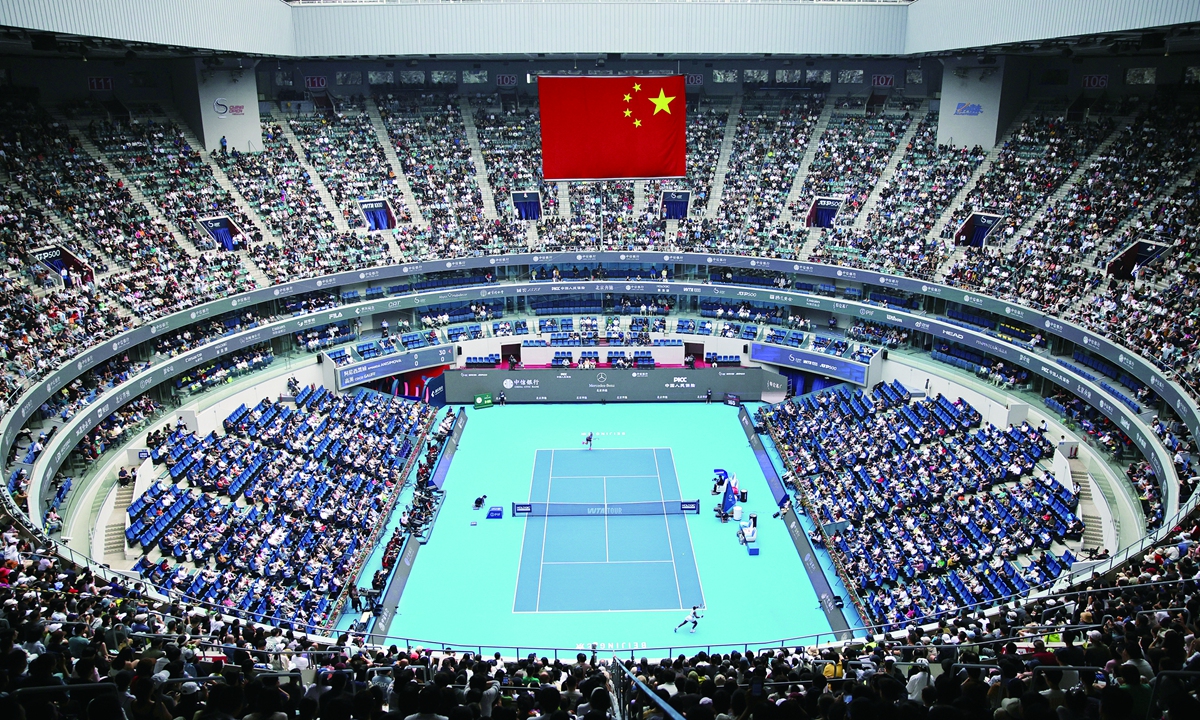
As international tennis tournaments multiply across China this autumn, organizers are increasingly looking beyond the court, seeking to turn a trip to a tournament into a broader travel experience.
The 2026 Chinese tennis season, starting in September, will bring a series of international events to cities including Chengdu, Hangzhou and Suzhou besides flagship events in Beijing and Shanghai.
The growing concentration of tournaments is giving Chinese cities a chance to connect sporting events with local consumption, cultural activities and tourism.
Shanghai offers perhaps the clearest example of how that strategy is developing.
In 2025, the Shanghai Masters attracted more than 250,000 spectators, with about 10 percent coming from overseas and 60 percent from outside Shanghai, according to the Shanghai municipal government. The tournament also generated more than 100 million yuan ($14.8 million) in ticket revenue.
The figures have encouraged organizers and city authorities to think beyond the traditional model of selling a ticket to a tennis match.
During this year's Shanghai Masters, ticket packages will include options combining matches with direct transportation, family experiences and visits to other Shanghai attractions, the organizers have announced.
The approach fits into Shanghai's broader effort to use major sporting events to attract international visitors.
The experience in Shanghai suggests that the relationship between tennis and tourism can work in both directions: a tournament brings people to a city, while the city gives spectators reasons to stay longer and spend money beyond the stadium.
For host cities, making tennis more than a sporting event can also serve as a platform for destination marketing, particularly when the event attracts an international audience.
Sports tourism can offer cities something that conventional sightseeing does not, according to tennis commentator Chen Chi.
"Tennis events can activate destinations and build recognizable identities," Chen told the Global Times. "The international player base and global fan following of tennis give host cities an audience well beyond their local audiences, which is widely seen at the Grand Slam events."
The challenge now is to make those visitors stay longer and explore more of the host city. That is where the "ticket plus" model comes in.
Rather than simply asking visitors to buy a match ticket, organizers are increasingly packaging the tournament with hotels, transportation, attractions and other experiences.

Culture matters
In Suzhou, East China's Jiangsu Province, organizers of the WTA 125 Suzhou Open are trying to connect the tournament with the city's existing cultural resources.
Zhou Yunsong, tournament director of the Suzhou Open, said the timing gives spectators an opportunity to combine a tennis trip with a holiday as it partially overlaps with the annual National Day holidays.
"For our spectators, this is a rare opportunity to combine watching tennis with travel. For domestic tennis fans, they don't have to take time off work as they normally would," Zhou told the Global Times.
The tournament venue, the Yangcheng Lake International Tennis Center, is located near several cultural and commercial areas in Suzhou.
The event has also introduced a hotel-and-tennis package, while organizers have arranged cultural experiences for players, including visits to Suzhou's gardens and local cultural venues.
"To give players an immersive experience of Suzhou's charm, we have planned a range of cultural activities, including visits to the Suzhou Museum, tasting authentic Suzhou cuisine, listening to Kunqu Opera, trying on traditional Chinese qipao and visiting embroidery workshops," Zhou noted.
Zhou sees a broader change in the way people plan trips.
"Traveling to sporting events is becoming a choice for more and more people," he said. "In the past, tourism was about sightseeing - going to a destination, taking photos and checking in. Now, especially among younger generations, people are more inclined to take themed trips."
The idea, he said, is to use the tournament as the starting point for a much wider city experience.
"We hope Suzhou can, with the professional tournament at its core, connect all of Suzhou's tourism resources, including its food, gardens, water towns and shopping, so that visitors can travel around the city for the sake of one match."
Players as ambassadors
For international tennis, this model has another potential advantage: The players themselves can become part of a city's tourism promotion.
Beijing, for instance, is bringing the players themselves into the tourism story. Li Xuhua, general manager of the China Open, said the tournament plans to give players more opportunities to experience the city.
Current world No.1 Jannik Sinner is among the players who are invited to participate in a hutong (traditional alleyway) tour during his stay in Beijing, Li told the Global Times.
The China Open is also expanding its off-site activities this year.
Li said the tournament will work with the local government to establish more match-watching venues in major commercial areas, allowing people to experience the tournament outside the main tennis center.
"The information from the tennis court can go out and reach people around the city," Li said.
For organizers such as Li, the goal is to make the tournament a broader part of the city's cultural and public life.
"We want this rare tennis carnival to be richer and more colorful, and to give fans more time to experience the appeal of tennis," Li said.
The emerging model is still at an early stage as different event organizers are exploring their own strategies. But the direction is becoming clearer: Tournaments are being used not only to fill seats in stadiums, but also to promote cities as travel destinations.
。
Current article:http://bs25wp.bomanglangsugangunxileba.cyou/wimz/no3g1.html
Published on:01:03:43
相关新闻
- Gartner 预测:2026 年存储器市场规模 > 2025 年半导体整体收入
- Australia's defense‑funded report hypes risks to subsea cables to 'serve military goals'
- 小米6.35亿北京再拿地 拟用于建设新能源汽车工厂
- 10股筹码连续多期集中!下周2股解禁比例超50%(附股)
- 外媒:加沙哈马斯领导人下落成谜
- Western Investors Set to Return to India, EMEs as Expert Predicts 'Multiple Recessions' in US, EU
- 《GTA6》俱乐部泄露被赞太真实 跟现实中一样“压抑”
- 退款
- 美债危机真那么糟糕吗?
- 建昌县境内发现一处明清时期辽西古道遗址
最后更新
- 大叶股份:骑乘式锂电化是必然的发展趋势
- WAIC 2026|从芯片到十万卡集群,太初元碁打破“超算智算二选一”
- 第三届中美1.5轨对话举行
- 1套豪宅曾卖1.3亿元!40岁郜林当经理:工资只够油钱 但我毫不在乎
- 1.3万元起的RTX 4090根本买不到 区域总代也只有1-3块
- 三星 Galaxy S27 Ultra 手机渲染图曝光:背面相机模组迎最大变化,保留 S Pen 插槽
- “你不涨经验,但区域会”——公交车检票员模拟器 Resonant 如何重写动作 RPG 的规则手册
- 美媒预测勇士新赛季阵容:库追携手伦德博格首发
- 有一种幸福叫“家门口就业”——连山区党建引领构建社区乐业新生态
- 日赚2亿的宁德时代,为何跑输大盘?
热门新闻
- 科恒股份:本次计提各项资产减值准备合计为2631.15万元
- 抚顺洗化厂:烷基苯产品引领创效之路 剑指世界级生产基地
- 罗技数字铅笔上架苹果官网 比一代Apple Pencil便宜
- 大伟哥直言《源初之结》"非常不米哈游" 做游戏太难了
- 中矿资源:津巴布韦年产10万吨硫酸锂项目预计2027年年中建成并投入生产
- 【元旦放假通知】杭州市康运幼儿园2025年元旦放假通知
- China's premier digital publishing expo to debut cultural gaming section
- 惊!新西兰迎第五波新冠疫情!一周死27人!专家:今年或1000人死
- 从0到N,雄安这样定义创新 | “雄安星”何以一飞冲天
- 全球共振,压力期持续到何时?